
Health Avenue Appointments
New Garden Town, LHR
IMC Appointments
DHA Phase-5, LHR
For HealthAvenue Appointments
For IMC Appointments
Uterine fibroids are the growth/lump in the uterus. Fibroids can be inside the uterus, on the outside the uterus or in the wall of the uterus. It is called as the leiomyomas or myomas.
Fibroids are very common in women in their 30s and 40s but it can occur or grow at any stage of life after menarche.
What causes uterine fibroids?
Although there are multiple factors that can cause fibroids but the female hormones estrogen and progesterone seem to make them grow. Your body makes the highest levels of these hormones during the reproductive years.
What are the symptoms?
Fibroids may be asymptomatic or the symptoms may be related to irregular bleeding, heavy bleeding, pain during bleeding or pain lower abdomen. The other problems may be related to pressure on the other organs like fullness or pressure in belly, low back pain, pain during Sex or urge to urinate often.
Heavy bleeding during your periods can lead to anemia. Anemia can make you feel weak and tired. Sometimes fibroids can make it harder to get pregnant. Or they may cause problems during pregnancy, such as going into early labor or losing the baby (miscarriage)
How are uterine fibroids diagnosed?
Fibroids are diagnosed by history , examination & ultrasound.
Your doctor may send you to have an ultrasound or another type of test that shows pictures of your uterus. These help your doctor see how large your fibroids are and where they are growing.
Your doctor may also do blood tests to look for anemia or other problems.
TREATMENT OF FIBROIDS
All the treatment are decided on individual merits & needs . It depends upon the symptoms , size of the fibroid, age of patient & especilay the future desire for pregnancy. Small, asymptomatic Fibroids do not need treatment, a regular follow up with ultrasound is all that is needed in these patients.
In patients who have symptoms or fibroid size is large treatment options can be myomectomy or hysterectomy. Myomectomy can be done by hysteroscopy, laparoscopy or laparotomy depending upon site & size of the fibroids.
Laparoscopic surgery has the advantages as mentioned in section of gynecological endoscopy.
What is endometriosis?
Endometriosis is the abnormal growth of cells (endometrial cells) similar to those that form the inside or lining the tissue of the uterus, but in a location outside of the uterus. Endometrial cells are cells that are shed each month during menstruation. The cells of endometriosis attach themselves to tissue outside the uterus and are called endometriosis implants. These implants are most commonly found on the ovaries, the Fallopian tubes, outer surfaces of the uterus or intestines, and on the surface lining of the pelvic cavity.They can also be found in the vagina, cervix, and bladder, although less commonly than other locations in the pelvis. Rarely, endometriosis implants can occur outside the pelvis, on the liver, in old surgery scars, and even in or around the lung or brain.
Symptoms of Endometriosis?
Endometriosis can present by different presentation. A woman who have endometriosis, may have no symptoms. Of those who do experience symptoms, the common symptoms are pain (usually pelvic pain ) and infertility. Pelvic pain usually occurs during or just before menstruation and lessens after menstruation. Some women experience painful sexual intercourse (dyspareunia) or cramping during intercourse, and or/pain during bowel movements and/or urination. Even pelvic examination by a doctor can be painful. The pain intensity can change from month to month, and vary greatly among women. Some women experience progressive worsening of symptoms, while others can have resolution of pain without treatment.
Pelvic pain in women with endometriosis depends partly on where the implants of endometriosis are located.
Endometriosis can be one of the reasons for infertility for otherwise healthy couples. When laparoscopic examinations are performed for infertility evaluations, endometrial implants can be found in some of these patients, many of whom may not have painful symptoms of endometriosis. The reasons for a decrease in fertility are not completely understood, but might be due to both anatomic and hormonal factors. The presence of endometriosis may involve masses of tissue or scarring (adhesions) within the pelvis that may distort normal anatomical structures, such as Fallopian tubes, which transport the eggs from the ovaries. Alternatively, endometriosis may affect fertility through the production of hormones and other substances that have a negative effect on ovulation, fertilization of the egg, and/or implantation of the embryo.
Other symptoms that can be related to endometriosis include:
Rare symptoms of endometriosis include chest pain or coughing blood due to endometriosis in the lungs and headache and/or seizures due to endometriosis in the brain.
Incidence of endometriosis?.
Estimates suggest that between 20% to 50% of women being treated for infertility have endometriosis, and up to 80% of women with chronic pelvic pain may be affected. Endometriosis is rare in postmenopausal women.
Who is effected?
Endometriosis effects women in reproductive years . Most cases of endometriosis are diagnosed in women aged around 25 to 35 years. It can occur in teen age girls but rare in menopausal women.
What causes endometriosis?
The exact cause of endometriosis is unknown. One theory is that the endometrial tissue is deposited in unusual locations by the backing up of menstrual flow into the Fallopian tubes and the pelvic and abdominal cavity during menstruation (termed retrograde menstruation). But retrograde menstruation cannot be the sole cause of endometriosis. .Another possibility is that areas lining the pelvic organs possess primitive cells that are able to grow into other forms of tissue, such as endometrial cells. (It is also likely that direct transfer of endometrial tissues during surgery may be responsible for the endometriosis implants sometimes seen in surgical scars (for example, episiotomy orCesarean section scars). Transfer of endometrial cells via the bloodstream or lymphatic system is the most likely explanation for the rare cases of endometriosis that develop in the brain and other organs distant from the pelvis . Finally, there is evidence that shows alternations in the immune response in women with endometriosis.
How the diagnosis of endometriosis is made?
Endometriosis can be suspected based on symptoms of pelvic pain and findings during physical examination. Its important that neither the symptoms nor the physical examinations can be relied upon to conclusively establish the diagnosis of endometriosis. Imaging studies, such as ultrasound, can be helpful in ruling out other pelvic diseases and may suggest the presence of endometriosis in the vaginal and bladder areas, but still cannot definitively diagnose endometriosis. For an accurate diagnosis, a direct visual inspection inside of the pelvis and abdomen, as well as tissue biopsy of the implants are necessary. As a result, the only accurate way of diagnosing endometriosis is laparoscopy.
How is endometriosis treated?
Endometriosis can be treated by medical , surgical or combined medical & surgical.
The goals of endometriosis treatment may include pain relief and / or enhancement of fertility.
Laparoscopic Treatment of Endometriosis
Laparoscopy is the gold standard for the diagnosis of endometriosis i.e. the diagnosis of endometriosis is confirmed by laparoscopy. Laparoscopy is a surgical procedure done under general anesthesia. During laparoscopy, biopsies (removal of tiny tissue samples for examination under a microscope) can also be performed for a diagnosis.
The adhesions (bands of tissue that make organs stick together) are seprated at laparoscopy and Endometriomas (Blood filled endometriotic ovarian cysts) are treated, and normal uterine, tubal and ovarian relationship established, any endometriotic deposits found in the pelvis are also removed.
Medical treatment of endometriosis
Medical treatment includes Nonsteroidal anti-inflammatory drugs to relieve pelvic pain and menstrual cramping. Because the diagnosis of endometriosis is only definite after a woman undergoes surgery.
Since endometriosis occurs during the reproductive years, many of the available medical treatments for endometriosis rely on interruption of the normal cyclical hormone production by the ovaries. These medications include GnRH analogs, oral contraceptive pills, and progestins.
Gonadotropin-releasing hormone analogs (GnRH analogs)
Gonadotropin-releasing hormone analogs (GnRH analogs) have been effectively used to relieve pain and reduce the size of endometriosis implants. These drugs suppress estrogen production by the ovaries by inhibiting the secretion of regulatory hormones from the pituitary gland. As a result, menstrual periods stop, mimicking menopause. Nasal and injection forms of GnRH agonists are available (Zoladex, Leuprolide).
The side effects are a result of the lack of estrogen, and include:
Fortunately, by adding back small amounts of estrogen and progesterone in pill form (similar to treatments sometimes used for symptom relief in menopause) many of the annoying side effects due to estrogen deficiency can be avoided. “Add back therapy” is the term that refers to this modern way of administering GnRH agonists along with estrogen and progesterone in a way to keep the treatment successful, but avoid most of the unwanted side effects.
Oral contraceptive pills
Oral contraceptive pills (estrogen and progesterone in combination) are also sometimes used to treat endometriosis. The most common combination used is in the form of the oral contraceptive pill (OCP). Continuous use in this manner will free a woman of having any menstrual periods at all. Occasionally, weight gain, breast tenderness, nausea, and irregular bleeding are mild side effects. Oral contraceptive pills are usually well-tolerated in women with endometriosis.
Progestins
Progestins [for example, medroxyprogesterone acetate, norethindrone acetate, norgestrel acetate ] are more potent than birth control pills and are recommended fin selected who do not obtain pain relief from or cannot take a birth control pill.
Side effects are more common and include:
Aromatase inhibitors
These drugs act by interrupting local estrogen formation within the endometriosis implants themselves. They also inhibit estrogen production in the ovary, brain, and other sources, such as adipose tissue. Aromatase inhibitors cause significant bone loss with prolonged use and cannot be used alone without other medications such as GnRH diagonists or combination of oral contraceptives in premenopausal women because they stimulate development of multiple follicles at ovulation
Menopause — gone without a period for more than one year —there should be no menstrual bleeding. Even a little spotting is not normal after menopause. In case of postmenopausal bleeding, evaluation by the doctoris necessary as it may be due to health problems, some of which are serious and need urgent treatment.
Causes of Postmenopausal Bleeding
Several health conditions can cause postmenopausal bleeding, including:
Polyps: These are growths, usually noncancerous but may be cancerous. Polyp can develop in the uterus, on the cervix, or inside the cervical canal, and may cause bleeding or abnormal vaginal discharge.
Endometrial atrophy (thinning of the endometrium): The endometrium, the tissue that lines the uterus, can become very thin after menopause because of diminished estrogen levels, and may cause unexpected bleeding.
Endometrial hyperplasia: In this condition, the lining of the uterus becomes thick, usually as a result of too much estrogen and too little progesterone, and bleeding may occur as a result. Obesity may be the cause of the problem. Some patients with endometrial hyperplasia may have abnormal cells that can lead to endometrial cancer (cancer of the uterine lining).
Endometrial cancer (uterine cancer): Bleeding after menopause can be a sign of endometrial cancer.
Other causes: Hormone therapy, infection of the uterus or cervix, use of certain medications such blood thinners, and other types of cancer can cause postmenopausal bleeding.
Determining the Cause of Postmenopausal Bleeding
The cause of post menopausal bleeding can be determined by taking medical history, performing a physical exam, and conducting a few tests. It includes
Transvaginal ultrasound:
Endometrial biopsy: A thin tube is inserted into your uterus and a tiny sample of the uterine lining is removed so that it can be sent to a lab to look for abnormalities.
Hysteroscopy: During this test, an instrument with a light and small camera is used to examine the inside of the uterus and look for problems.
D&C (dilation and curettage): This test allows to remove tissue from the uterus lining so that it can be sent to a lab for analysis.
How Is Postmenopausal Bleeding Treated?
Treatment depends on what is causing the bleeding. If polyps are cause , surgery may be needed to remove them. Endometrial atrophy can be treated with medication alone; endometrial hyperplasia may be treated with medication, such as progestin or progesterone therapy, and/or surgery to remove thickened areas of the endometrium or hysterectomy can be planned . In conditions with potential of malignancy or malignancy , hysterectomy is advised.
Abnormal Vaginal Bleeding
Normal menstrual bleeding occurs during reproductive years. Menstrual cycle ranges from 2 – 7 / 28 + 7 days Mid discomfort or pain may occur during normal menstruation.
Many women experience abnormal vaginal bleeding . This may my be spotting in between the periods , spotting befor start of periods. The abnormality of menstruation be in duration of peroids Bleding or it may the length of the cycle . The periods may be heavy . When you are not expecting your menstrual period. So menstrual cycle is not normal
Causes of abnormal bleeding
Abnormal vaginal bleeding has many possible causes.
Because bleeding can be due to problem with pregnancy, possible pregnancy should always be considered in a woman of childbearing age.
Other causes of abnormal vaginal bleeding may include:
Treatment:
It is important to evaluate for the cause of abnormal vaginal bleeding. It may be due to some simple cause but may be due to serious problem that needs urgent treatment.
Treatment of abnormal vaginal bleeding depends on the cause of the bleeding. It may be non hormonal , hormonal or the surgical treatment.
Female evaluation
Examination
Weight & examination related to above mentioned points in history is important. Local pelvic examination for pelvic pathology.
Investigations
Base line test according to history & examination
Focus will be on
Treatment
Infertility treatment is given according to the work up .
It includes
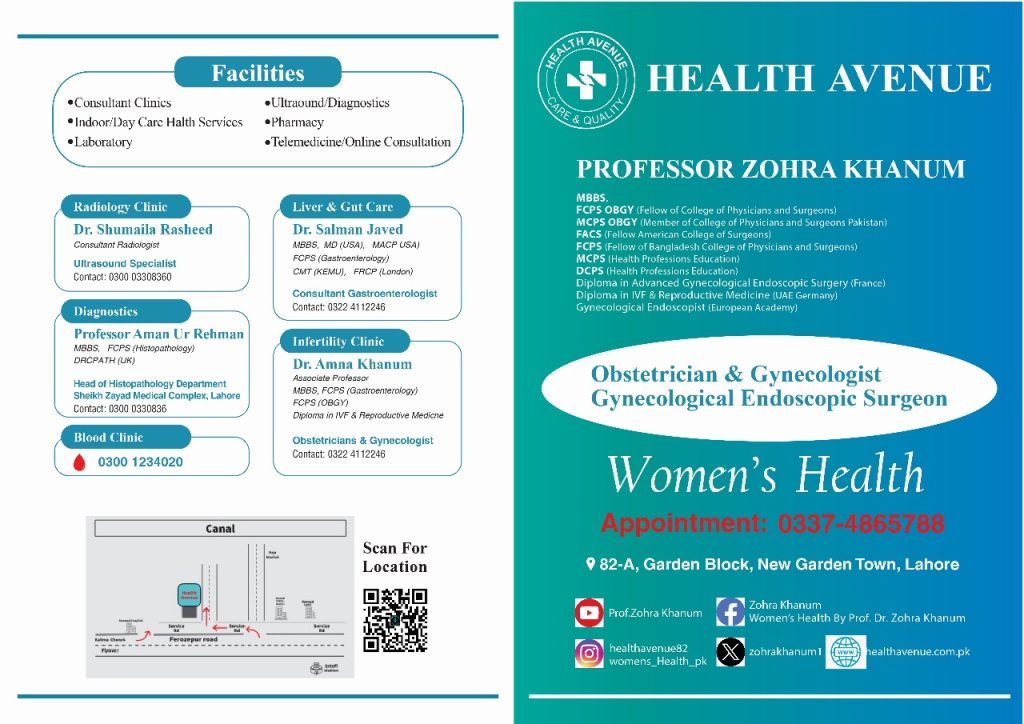

Obstetrician & Gynecologist
Gynecological Endoscopic Surgeon
Copyright © 2024 . All Rights Reserved.
Designed & Developed by Umar Arshad